01The three structures, in one paragraph each
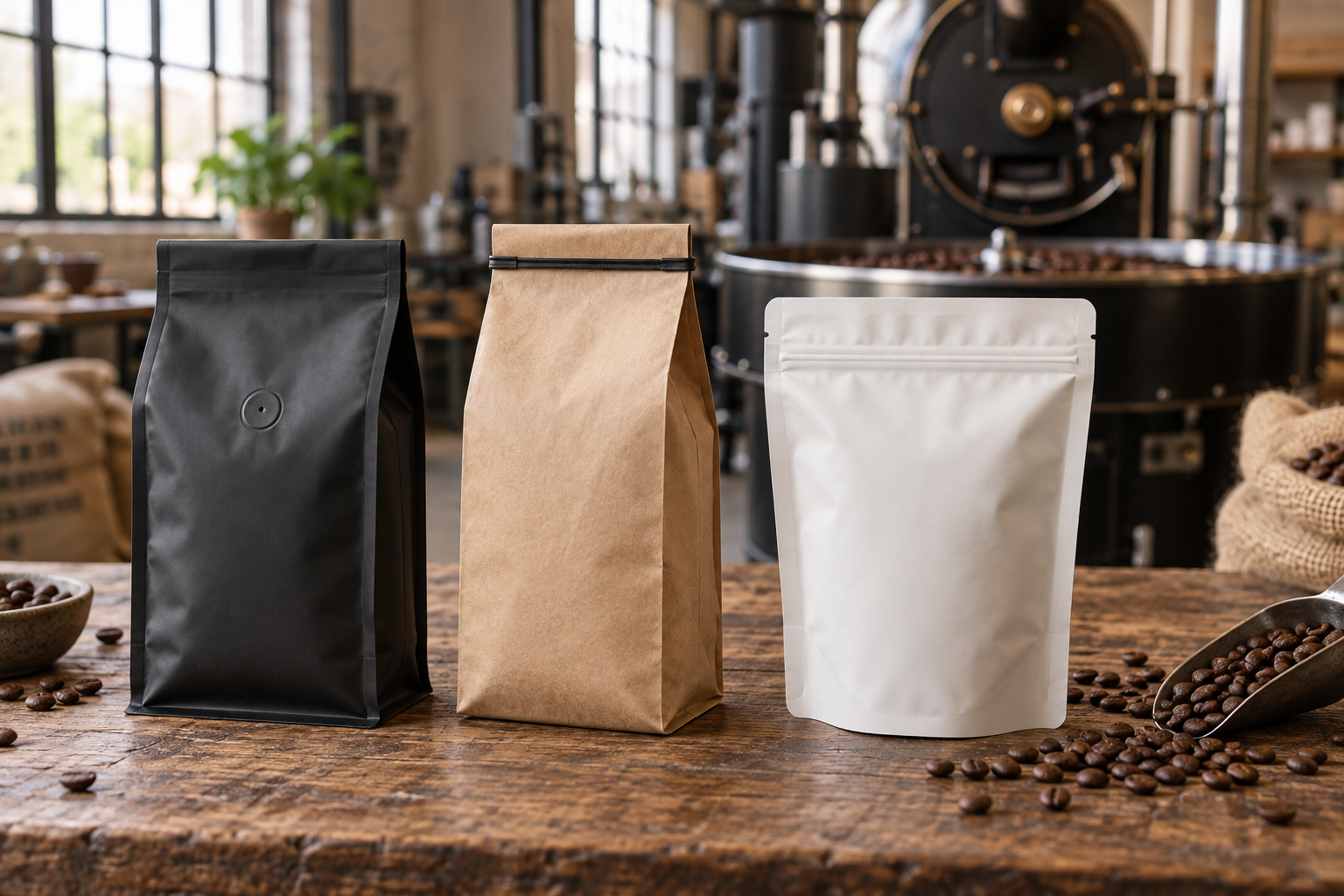
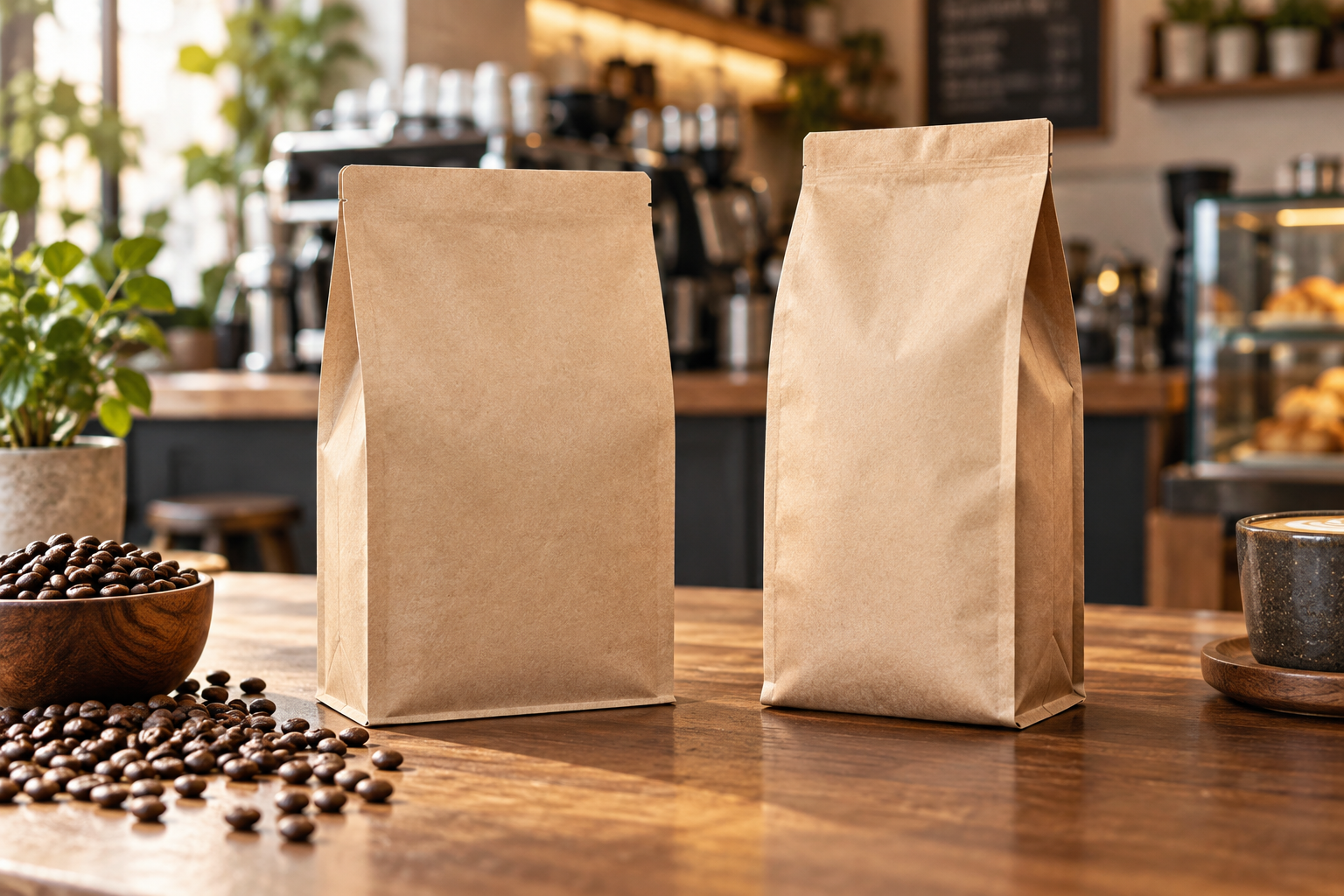
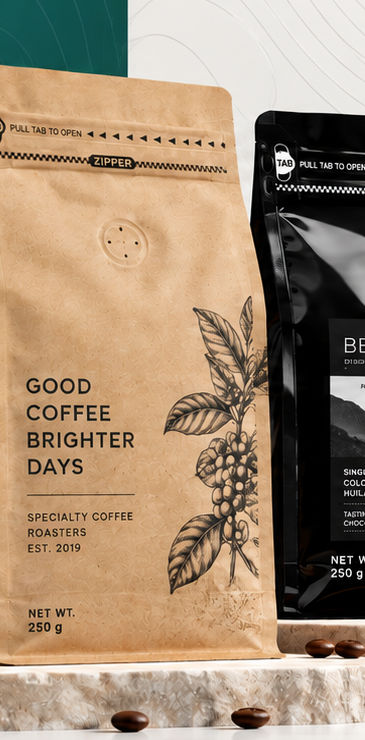
Kraft paper coffee bags are a paper-outside, film-inside laminate — typically Kraft / VMPET / PE. They look natural and artisanal, and the metallized inner layer does the real barrier work. They are the default choice for specialty roasters selling whole bean at retail.
Foil coffee bags replace the paper with a pure aluminum layer (PET / AL / PE). This is the highest standard barrier: near-zero oxygen and moisture transmission, the best aroma retention, and the longest shelf life. The look is premium-technical rather than natural.
Compostable coffee bags use PLA or certified compostable films (Kraft / PLA or cellulose-based structures). Barrier is lower than foil, shelf life is shorter, and unit cost is higher — but for brands whose customers buy on sustainability, the premium is repaid at the shelf.
02Barrier, shelf life and cost compared
Numbers assume a one-way degassing valve and correct heat sealing — the two factors that matter more than film choice once coffee is packed fresh.
| Structure | O₂ / Moisture Barrier | Typical Shelf Life | Relative Cost |
|---|---|---|---|
| Kraft / VMPET / PE | High (metallized layer) | 9–12 months | $ — baseline |
| PET / AL / PE (foil) | Very high (pure aluminum) | 12–24 months | $$ — +10–15% |
| Kraft / PLA (compostable) | Moderate | 6–9 months | $$$ — +25–40% |
03Which one should you choose?
- Specialty retail, natural brand image: kraft / VMPET — the market default for 12 oz whole bean.
- Long distribution chains, export, or maximum freshness claims: foil, no contest.
- Sustainability-led brand with local, fast-turnover sales: compostable — and plan shelf life around 6 months.
Key Takeaway
There is no universally 'best' coffee bag material — there is a best structure for your roast style, distribution speed and brand position. Send us those three answers and we will spec the laminate in one reply.