
A coffee brand can source excellent beans, perfect its roast curve, and still lose customers at the shelf — because the bag failed to protect the coffee, failed to communicate the brand, or failed a retailer's compliance check. Choosing coffee packaging bags involves more decisions than most first-time buyers expect: bag format, film structure, degassing valve, zipper, printing method, order volume, and lead time all interact.
This guide walks through each decision in the order we use when advising clients, so you can build a clear specification before you request quotes — and compare suppliers on substance rather than sales language.
Step 1: Start With the Coffee, Not the Bag
The right bag depends first on what goes inside it. Before looking at formats or artwork, define three things:
Roast and format. Whole beans stay fresh longer and release more CO₂ than ground coffee. Dark roasts degas faster and are more oily, which can affect seal cleanliness on filling lines. If you sell both whole bean and ground, you may need different structures for each.
Shelf-life target. How long must the coffee stay at full quality between roasting and consumption? A local roaster selling through cafés within two weeks has very different barrier requirements than a brand shipping subscription coffee internationally with a target of nine months of freshness. Shelf-life targets drive the barrier specification, and the barrier specification is the single biggest driver of bag cost.
Distribution channels. Retail shelf, e-commerce parcels, wholesale food service, and direct café supply each impose different constraints — shelf stability and front-panel impact for retail; puncture resistance and light weight for mailers; case sizes and stackability for wholesale.
Step 2: Choose the Bag Format
With your product profile defined, the format decision becomes much easier.
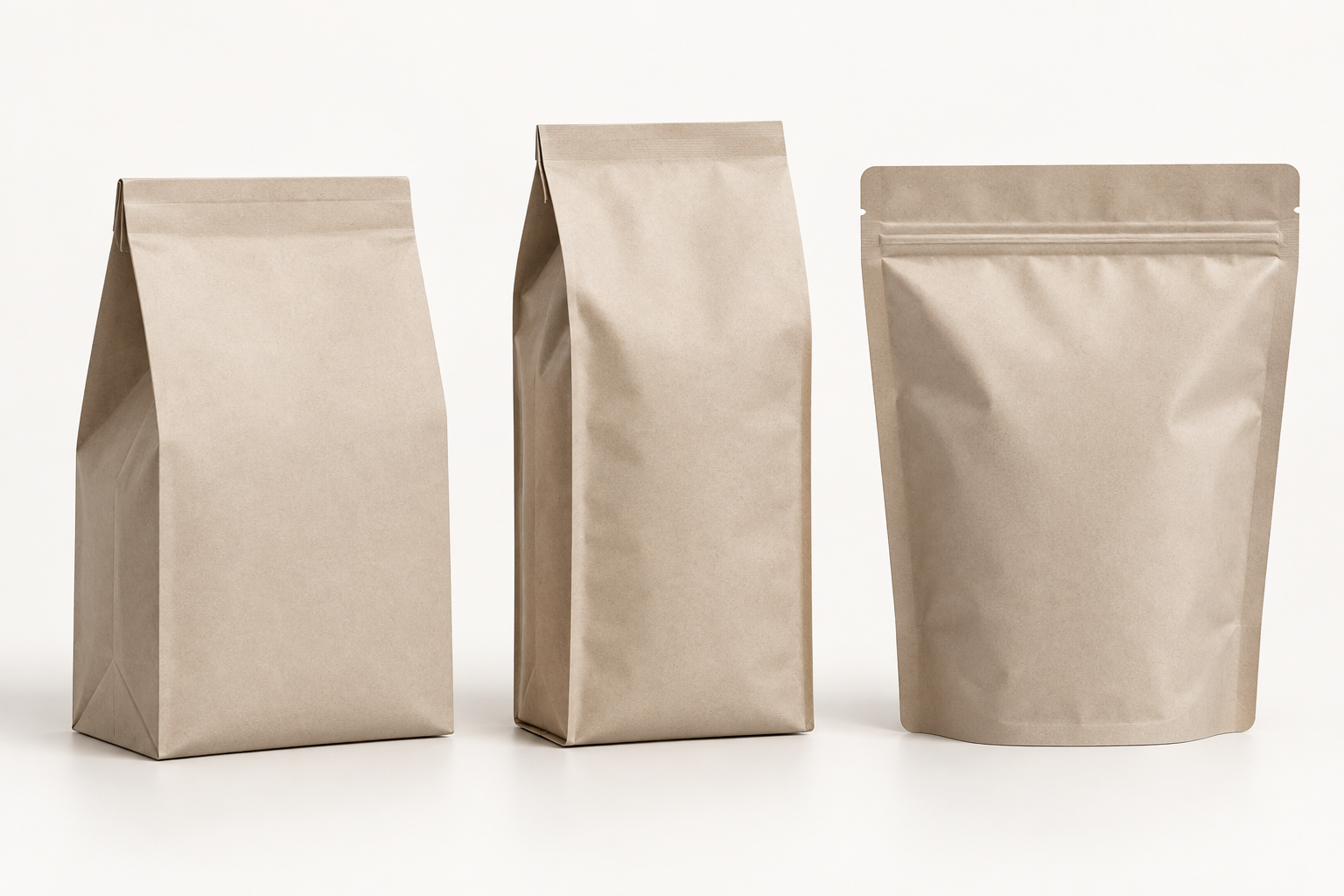
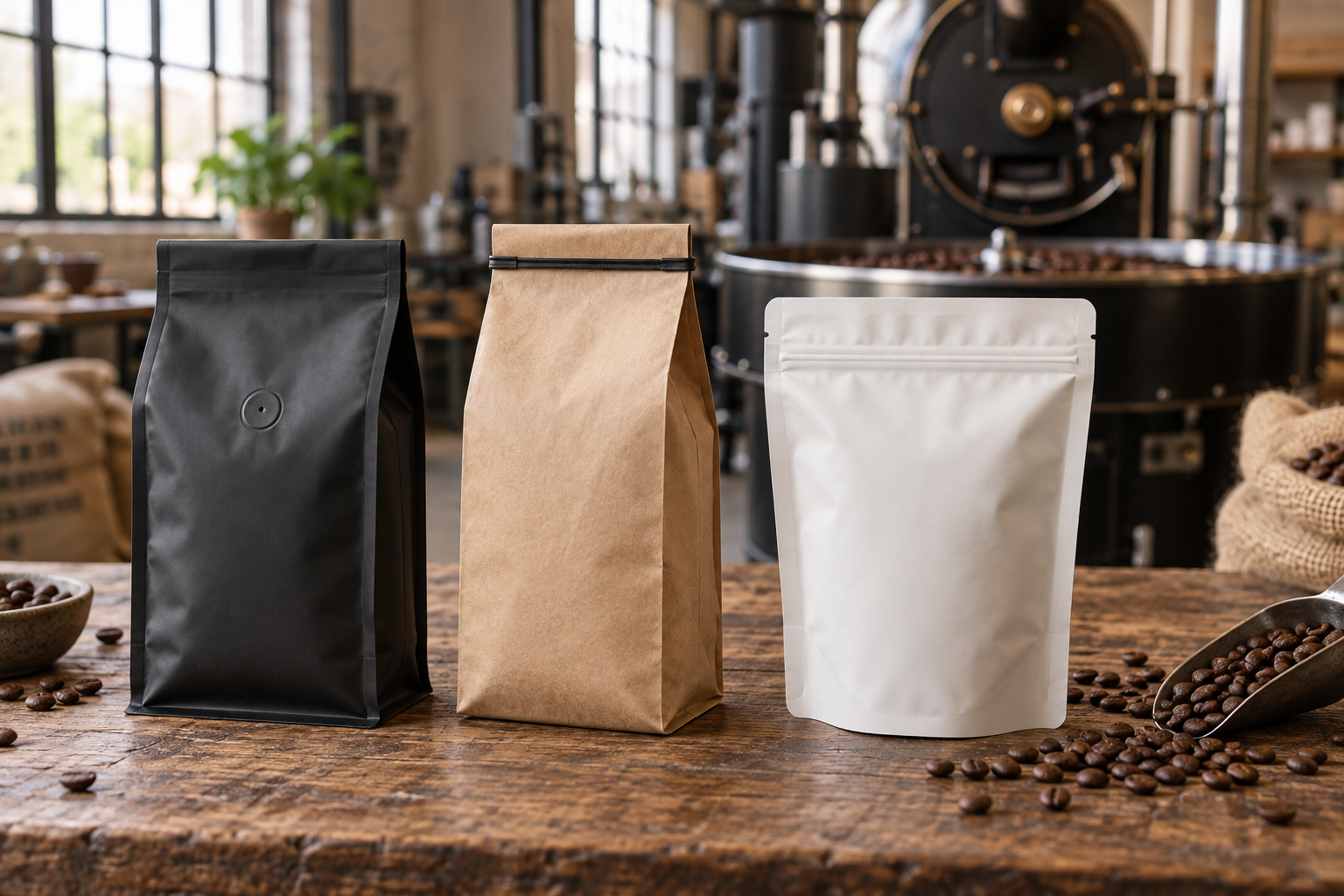
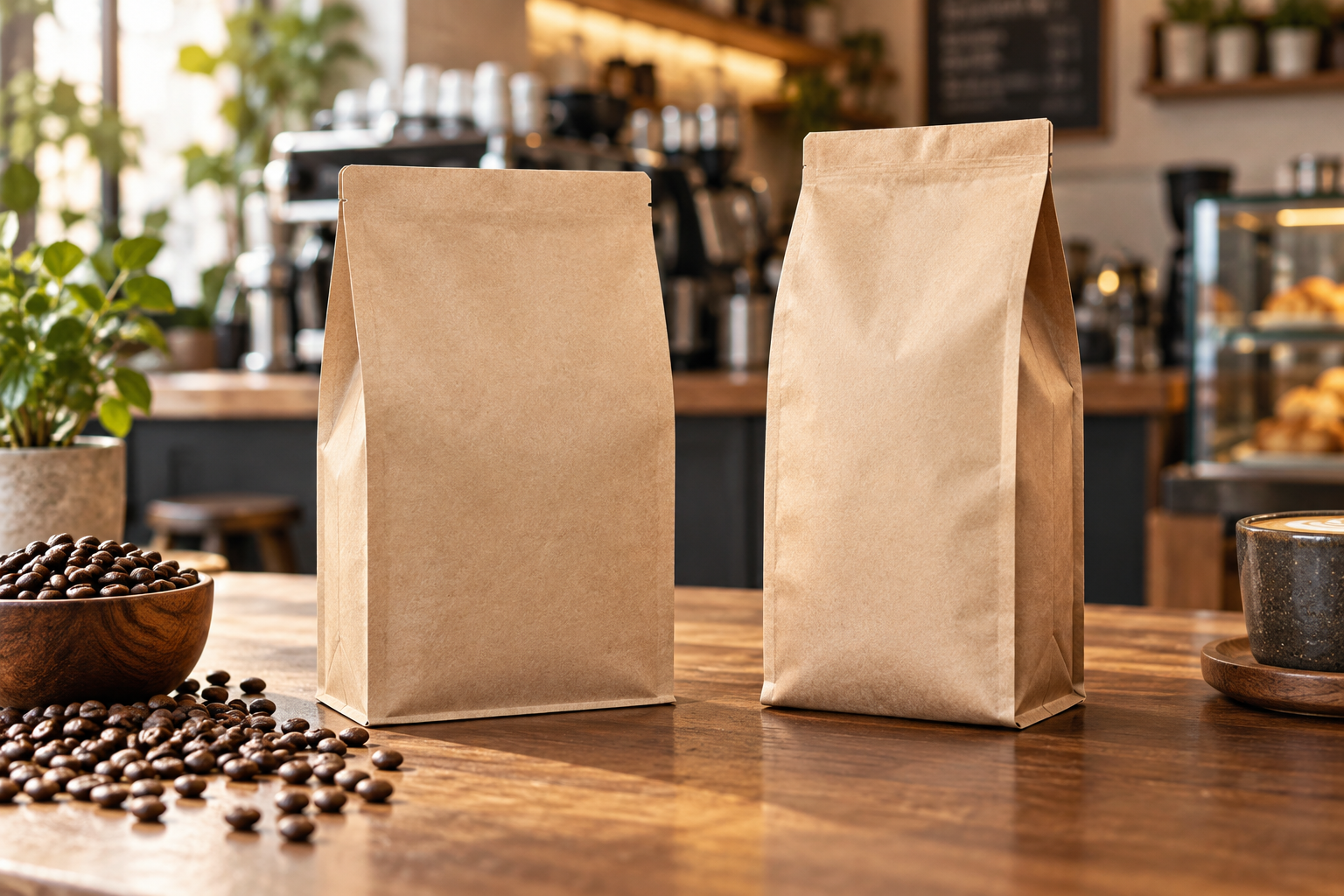
Flat bottom bags offer the strongest shelf presence: a stable base, four printable faces, and a premium feel. They are the default choice for specialty coffee in retail. The trade-offs are higher unit cost, more material usage, and slightly more complex sealing requirements.
Side gusset bags are the workhorse of high-volume coffee packaging. They stack efficiently, run smoothly on automated filling lines, and offer the lowest cost per unit among premium formats. If your priority is volume efficiency and you can work with a narrower front panel, side gusset bags are hard to beat.
Stand up pouches with resealable zippers suit ground coffee, smaller sizes (100 g–500 g), and e-commerce. The zipper adds consumer convenience; many retail buyers now treat it as a default expectation for consumer sizes.
For a detailed comparison of the two most common premium formats, see our guide on flat bottom vs side gusset coffee bags.
Step 3: Specify the Barrier Structure
The film structure determines how well the bag protects coffee and how much it costs. Most coffee bags use three-layer laminates:
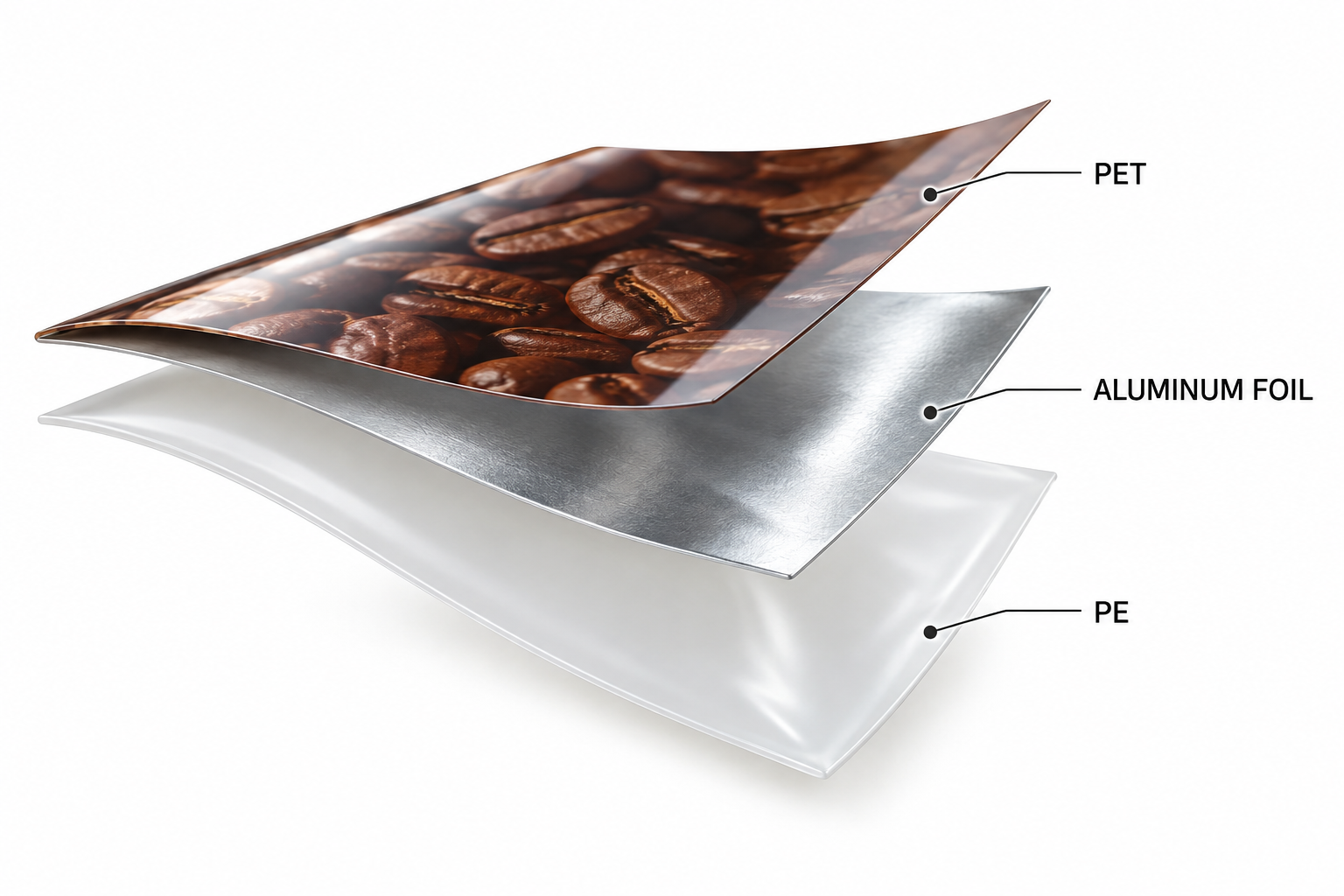
- Outer layer (PET or kraft): printability, abrasion resistance, appearance.
- Middle barrier layer: the freshness engine. Aluminum foil gives the highest barrier; metallized PET (VMPET) offers a cost-saving middle ground; for short shelf lives, high-barrier coated films may be enough.
- Inner sealant (PE or CPP): heat-seal strength and food-contact compliance.
A useful reference point: foil-based structures typically achieve oxygen transmission rates well below 1 cm³/m² per day, while VMPET structures land in a higher range. Ask every supplier to state the actual OTR and water vapor transmission rate (WVTR) of their proposed structure — not just "high barrier" — and verify against your shelf-life target.
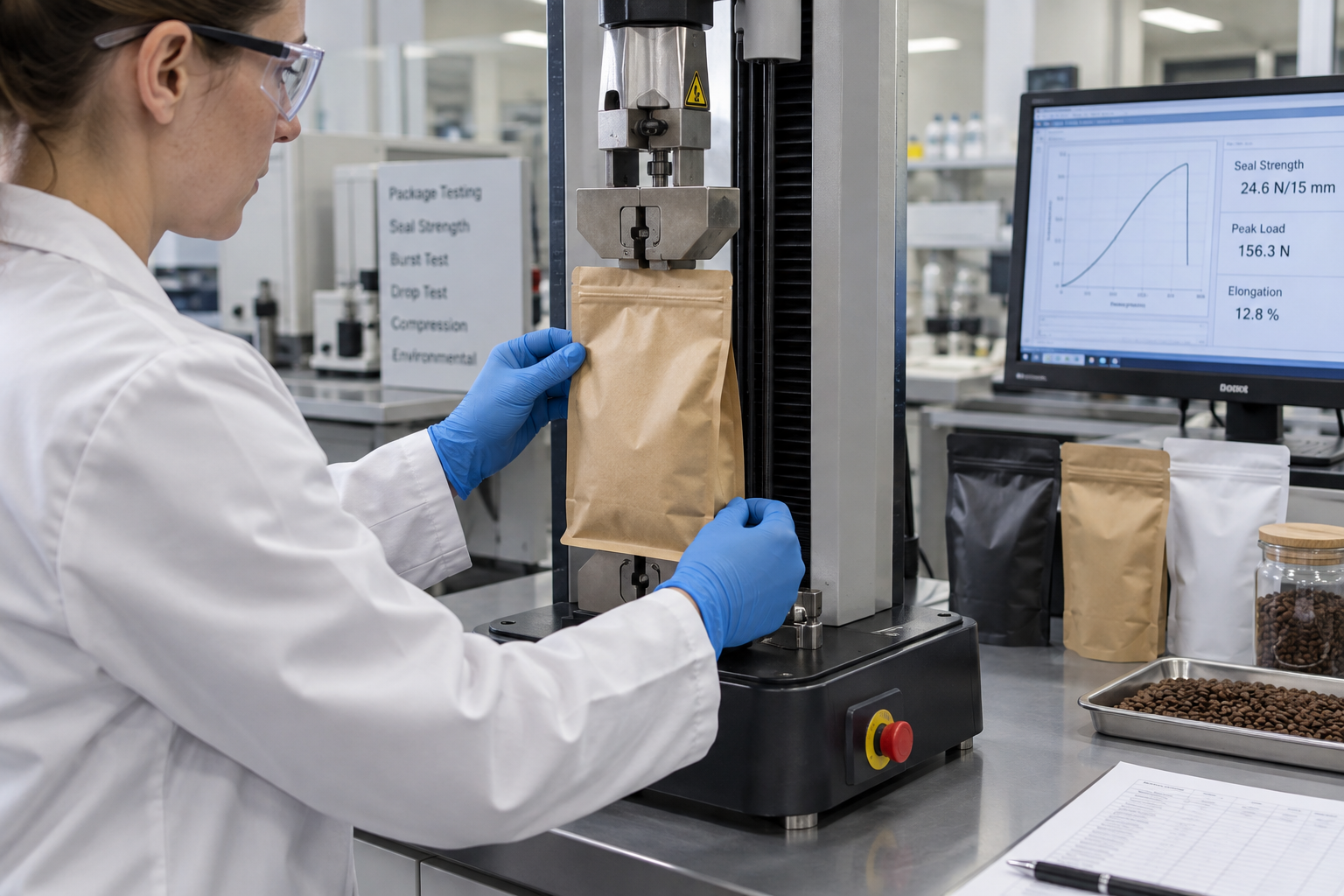
A field note from production: the barrier layer only works if the seals work. In factory testing, we routinely see bags with excellent film structures fail leak tests because of seal temperature or pressure issues on the bag-making line. When evaluating a supplier, ask how they test seal integrity — burst testing and dye-penetration checks on samples from each batch are a reasonable baseline.
Step 4: Decide on the Degassing Valve
If you pack coffee within days of roasting, a one-way degassing valve is effectively mandatory. Without it, CO₂ builds internal pressure and the bag balloons or bursts.
When specifying a valve, consider:
- Opening pressure. Lower opening pressure reduces ballooning but can admit air during rough handling. Your supplier should match the valve to your filling process and the coffee's degassing behavior.
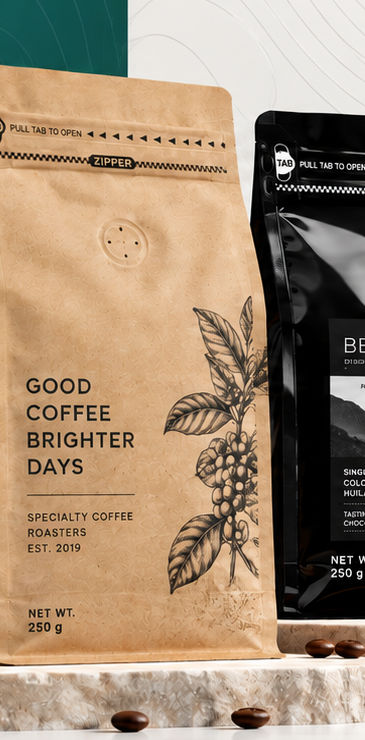
- Placement. Center-face placement is standard for flat bottom bags; corner or side placement may suit your filling equipment or design better.
- Quality. Cheap valves are a common failure point — stuck membranes or poor weld adhesion can leak. Reputable suppliers source valves from established manufacturers and weld them with dedicated equipment.
If you nitrogen-flush your bags or pack well-rested coffee, discuss with your supplier whether a valve is still needed; removing it simplifies recycling discussions and saves a small cost per bag.
Step 5: Plan the Resealable Zipper and Opening Features
For consumer sizes, a press-to-close zipper extends freshness after opening and is increasingly expected by retailers. For higher-end positioning, some brands add a pocket zipper for a cleaner look.
Also plan opening features: tear notches give a clean opening line but must be positioned away from seals to avoid weakening them; some retail formats use laser scoring for a controlled, straight tear.
Step 6: Match Printing Method to Your Volume
Rotogravure printing delivers the best color consistency and finish quality and is the standard for orders from roughly 5,000–10,000 bags upward, with printing plates as a one-time cost per color.
Digital printing eliminates plates and reduces MOQs dramatically — often viable from a few hundred bags — making it ideal for new brands testing designs, seasonal editions, or multiple SKUs. Color consistency between digital and gravure runs is not identical, so keep formats consistent within a product line.
A practical tip from our design reviews: keep critical brand colors defined with Pantone references, and request a printed proof on the actual film before approving mass production. Colors approved on a computer screen frequently shift when printed on matte film with a kraft undertone.
Step 7: Set Realistic MOQ, Lead Time, and Budget Expectations
Typical planning figures for custom coffee packaging bags:
| Item | Typical Range | Notes |
|---|---|---|
| MOQ (custom gravure) | 5,000–10,000 bags per design | Lower for digital printing or stock bags |
| Sampling time | 5–10 days | Digital pre-production samples |
| Mass production lead time | 15–30 days | After artwork approval and deposit |
| Freight (ocean, Asia→EU/US) | 4–6 weeks | Plan packaging orders one production cycle ahead |
Budgets vary widely with size, structure, and print coverage, but a useful expectation: packaging typically lands between a few cents and a few tens of cents per bag at volume — small compared to the product value, but worth optimizing because savings compound at scale.
Step 8: Evaluate Suppliers on Evidence, Not Promises
Any supplier can send a glossy catalog. The ones worth working with can show their process. Before committing, we recommend asking for:
- Physical samples of the exact structure proposed — not "similar to."
- Barrier test data (OTR / WVTR) for the film laminate.
- Seal strength and burst test results from recent production batches.
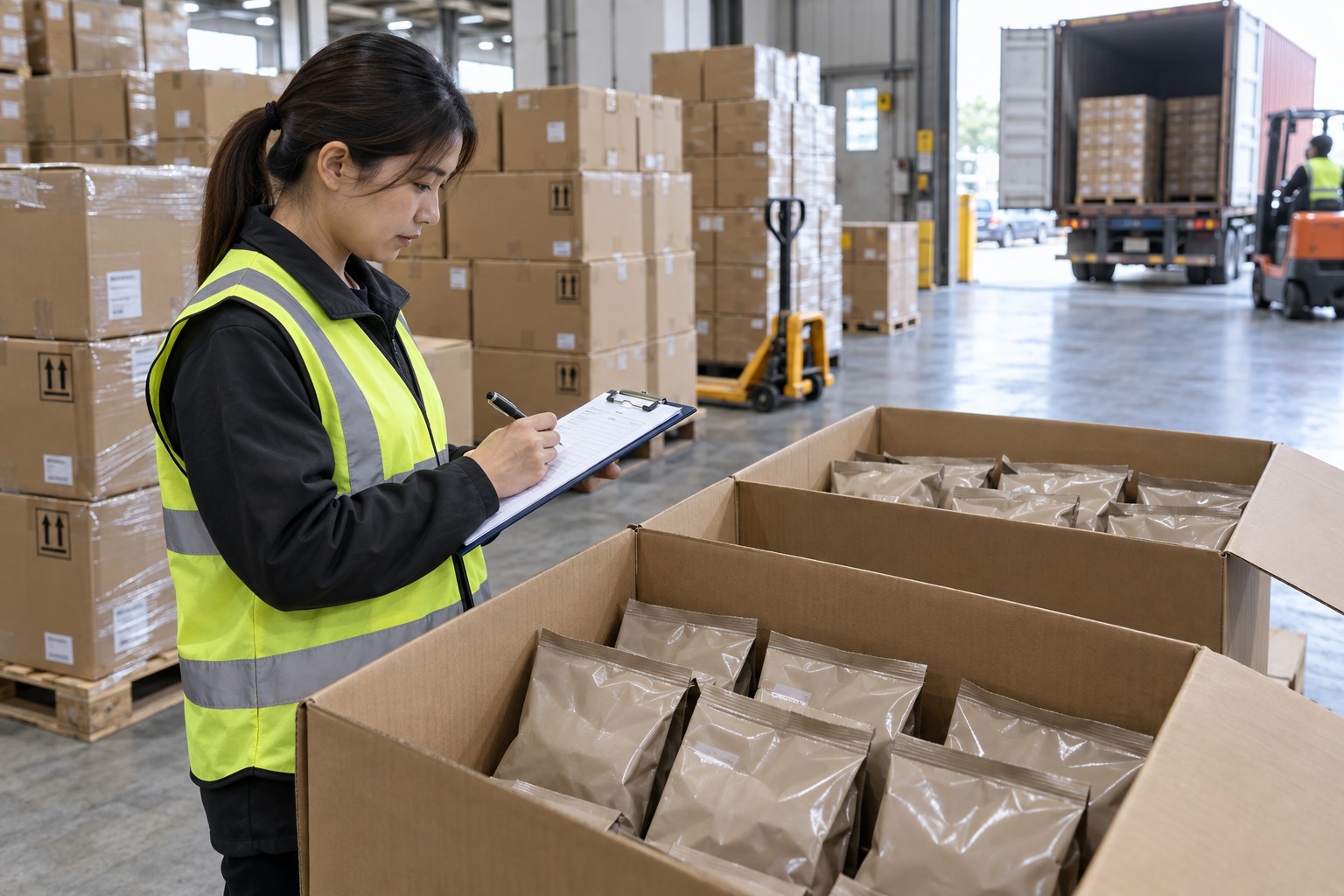
- Pre-shipment inspection terms — whether third-party inspection is accepted, and what AQL standard is used.
- A clear claims policy — what happens if goods arrive with defects, and who covers what.
Suppliers who answer these questions quickly and specifically are usually the ones with real quality systems behind them.
A Practical Specification Template You Can Send to Suppliers
To make quoting faster and comparison fairer, put your requirements into a one-page specification before contacting manufacturers. The template we recommend covers:
- Bag format and dimensions — e.g., flat bottom, 125 × 210 mm + 80 mm gusset (state whether dimensions are flat or filled).
- Target fill weight — 250 g whole bean; dimensions should be derived from this, not guessed.
- Film structure — requested laminate (or ask the supplier to propose with OTR / WVTR data).
- Features — degassing valve (position), zipper type, tear notch, hang hole, tin tie.
- Printing — number of colors, Pantone references, matte or gloss finish, whether metallized inks are used.
- Compliance — target markets, required label elements, food-contact declarations (e.g., EU 10/2011 or FDA 21 CFR compliance statements).
- Volume and schedule — estimated monthly usage, first order quantity, required delivery date.
- Logistics — destination port, carton labeling requirements, palletization preferences.
A supplier quoting against this document is giving you a like-for-like price. A supplier who resists structured specifications is telling you something useful as well.
Common Mistakes to Avoid
- Over-specifying barrier. If your coffee moves within weeks, an ultra-high-barrier foil structure may be unnecessary cost — and harder to recycle.
- Under-specifying seals. A cheap bag with weak seals destroys more coffee than a premium bag ever could.
- Artwork approved on screen only. Always approve a physical proof on the actual film.
- Ignoring filling equipment. Bag dimensions and film stiffness must match your filler; provide your equipment specifications to the manufacturer early.
- Order timing as an afterthought. Packaging lead times plus ocean freight routinely total 2–3 months; late packaging decisions delay product launches more often than any other component.
FAQ
How many coffee bags should I order the first time?
For a new brand, digital-printed short runs (500–2,000 bags) or stock bags with labels let you validate design and demand before committing to gravure MOQs of 5,000–10,000 bags.
Should I choose a valve or no valve for my coffee bags?
If you pack coffee within roughly two weeks of roasting, use a one-way degassing valve. If you pack fully rested coffee or use nitrogen flushing, a valve may be unnecessary — confirm with your supplier based on your process.
What is the difference between foil and metallized coffee bags?
Aluminum foil blocks nearly all oxygen, moisture, and light, giving the longest shelf life. Metallized PET costs less and weighs less but provides a lower barrier — suitable for shorter distribution cycles.
Can I get custom coffee bags with a low MOQ?
Yes. Digital printing supports runs from a few hundred bags, and many manufacturers (including stock-plus-label programs) serve small brands. Unit costs are higher than gravure at scale, but the total commitment is far lower.
How do I test coffee bag quality before a big order?
Request pre-production samples of the exact structure, run your own seal and fill tests on your equipment, check barrier data, and specify pre-shipment inspection terms in your purchase order — including a clear defect classification and remedy.
Conclusion
Choosing coffee packaging bags is a series of engineering decisions wrapped in a branding exercise. Work from the coffee outward: define shelf-life targets and channels first, then select format, barrier structure, valve, and printing method to match — and evaluate suppliers on test data, samples, and inspection terms rather than promises.
A well-specified bag protects your coffee, supports your brand, and scales with your growth; a poorly specified one creates problems that compound quietly until customers notice.
Get a Specification Review Before You Order
Not sure which structure fits your roast profile and distribution? Spuntree's packaging engineers review your product details, filling equipment, and volume, then recommend a bag structure with barrier data, samples, and transparent pricing. Send us your requirements — we reply within one business day with a practical recommendation, not a sales script.