If you roast, import, or sell coffee, packaging is one of the few decisions that touches almost every part of your business at once. It protects the beans during shipping, keeps aroma locked in during storage, carries your brand on a retail shelf, and increasingly determines whether a customer perceives your product as premium or generic.
Yet "coffee packaging" covers a wide range of products, materials, and features. A one-way degassing valve that matters enormously for freshly roasted beans is irrelevant for instant coffee. A kraft paper bag that looks great for a natural brand may be the wrong choice for coffee sold in humid climates. This guide explains what coffee packaging actually is, how the main types and materials differ, and what to look for when you source it from a manufacturer.
What Is Coffee Packaging?
Coffee packaging is any flexible or rigid container designed to store, protect, and present coffee products — from whole bean and ground coffee to instant coffee, coffee pods, and ready-to-drink formats. In the B2B flexible packaging industry, the term most often refers to coffee packaging bags: multilayer pouches and bags made from laminated films that combine barrier protection, printability, and shelf presence.
The core job of coffee packaging comes down to four functions:
- Barrier protection. Coffee is highly sensitive to oxygen, moisture, light, and external odors. A quality coffee bag acts as a barrier that slows staling and protects volatile aromatic compounds.
- Degassing. Freshly roasted coffee releases CO₂ for days and even weeks after roasting. Packaging must either allow that gas to escape without letting oxygen in (a degassing valve) or withstand the internal pressure.
- Shelf presence. On a retail shelf or an e-commerce thumbnail, the bag is often the first physical contact a customer has with your brand.
- Logistics durability. Coffee is heavy and dense. Bags must survive stacking, palletizing, container shipping, and repeated handling without punctures or seal failures.
Why Coffee Packaging Matters More Than Most Brands Expect
A common mistake we see from newer coffee brands is treating packaging as a late-stage branding exercise. In practice, packaging decisions made early — bag structure, film layers, valve placement — are hard and expensive to change after a filling line has been set up.
Three reasons packaging deserves early attention:
Freshness economics. Coffee stales through oxidation and the loss of volatile aromatics. Industry rule-of-thumb holds that roasted coffee loses a meaningful share of its perceived aroma within weeks of roasting when stored in a poorly sealed container, while a well-sealed, high-barrier bag can hold cupping quality for months. For a roaster selling subscriptions, that difference translates directly into how much coffee can be shipped and stored before quality drops below the brand's standard.
Cost per unit at scale. Packaging typically represents a small fraction of a bag of coffee's retail price, but at volume it becomes a significant line item. A structure optimized for your actual shelf-life requirement — rather than over-engineered — can reduce material cost by 10–20% without hurting quality.
Regulatory and retail requirements. Export markets impose specific labeling rules (ingredients, net weight, origin, best-before dates), and many retail chains have their own packaging compliance requirements. Designing the bag layout with these in mind avoids costly redesigns later.
The Main Types of Coffee Packaging Bags
Flat Bottom Coffee Bags
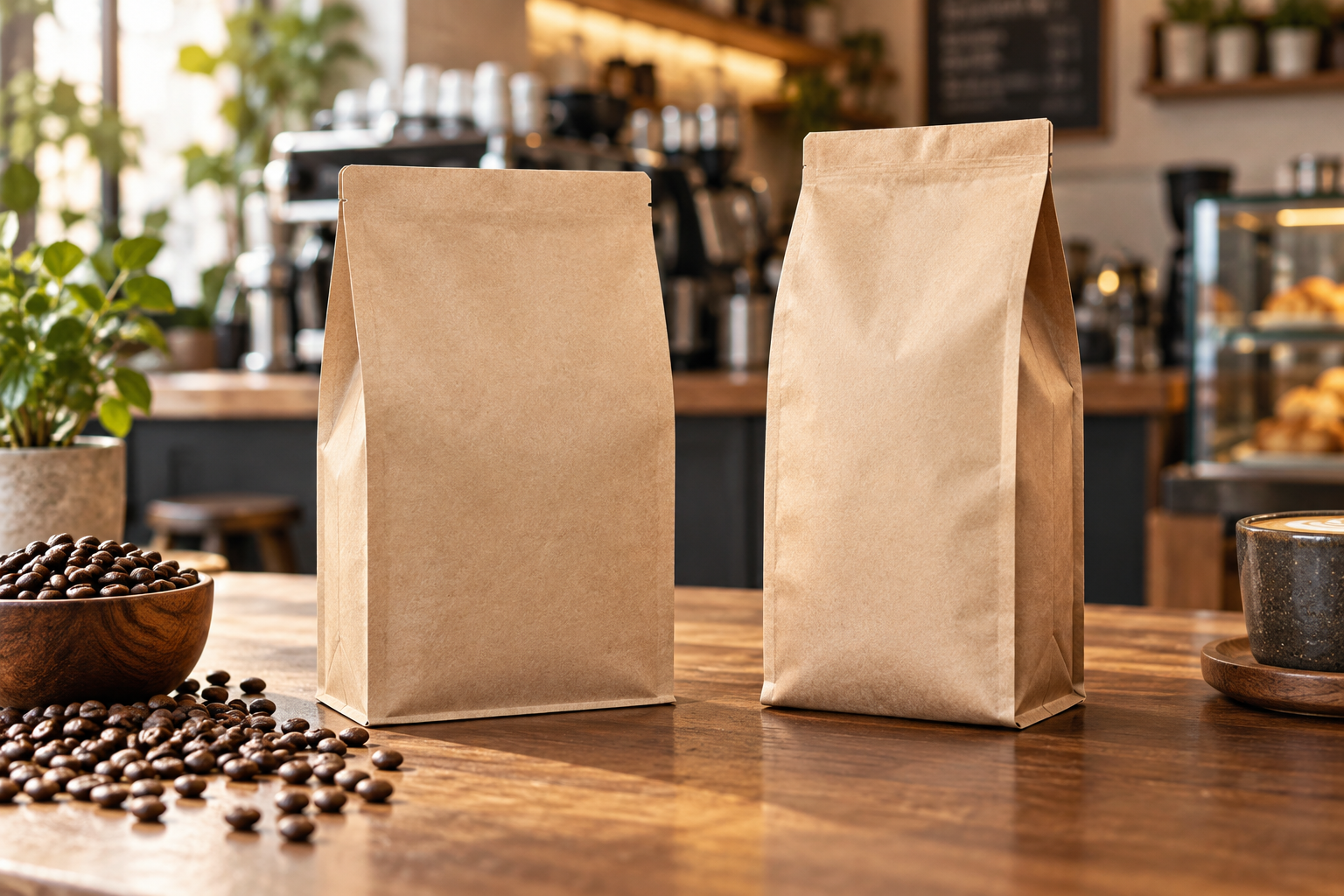
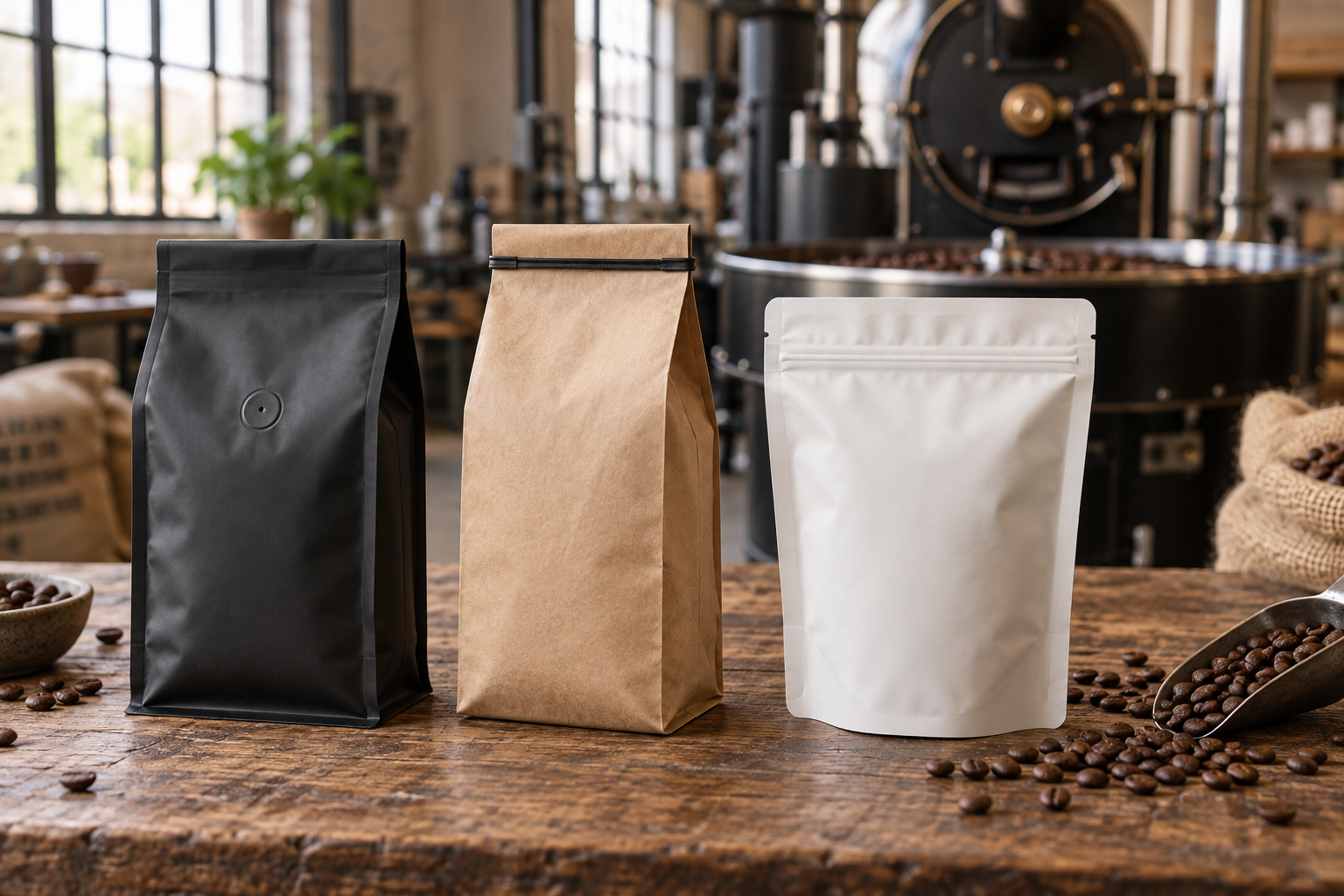
Flat bottom bags (also called box pouches or quad seal bags) have a flat base and four vertical seals, so they stand stably on a shelf and present four printable faces. They have become the dominant format for specialty coffee because the front panel offers a large, billboard-like print area and the structure feels premium in hand. They are typically the most expensive common format because they use more material and more sealing operations.
Side Gusset Coffee Bags
The classic roaster bag: a rectangular bag with folds on each side that expand as it fills. Side gusset bags are efficient to produce, stack tightly for shipping, and work well on automated filling lines. Their front panel is narrower than a flat bottom bag's, so brands with complex artwork sometimes prefer other formats, but for high-volume coffee they remain a cost-effective standard.
Stand Up Pouches
Stand up pouches have a bottom gusset that allows them to stand upright, usually with a resealable zipper. They are common for ground coffee, smaller retail sizes, and coffee-adjacent products like pods and drips. The zipper adds consumer convenience and helps keep coffee fresh after opening, which retail buyers increasingly expect.
Pillow Bags and Bulk Formats
Pillow bags are simple back-sealed sachets, usually used for instant coffee sticks, drip bags, or sample portions. For B2B bulk supply, coffee is also packed in large liner bags or vacuum-sealed bricks, sometimes inside corrugated cartons for container shipping.
Coffee Pods and Capsule Packaging
While not a bag, single-serve pods are a growing segment. Pods usually use multilayer lidding films with precise barrier properties, since the small format has a high surface-area-to-volume ratio and stales quickly.
Coffee Packaging Materials Explained
Almost all coffee bags are made from laminated films — two or more layers bonded together, each contributing a property no single material can provide on its own.
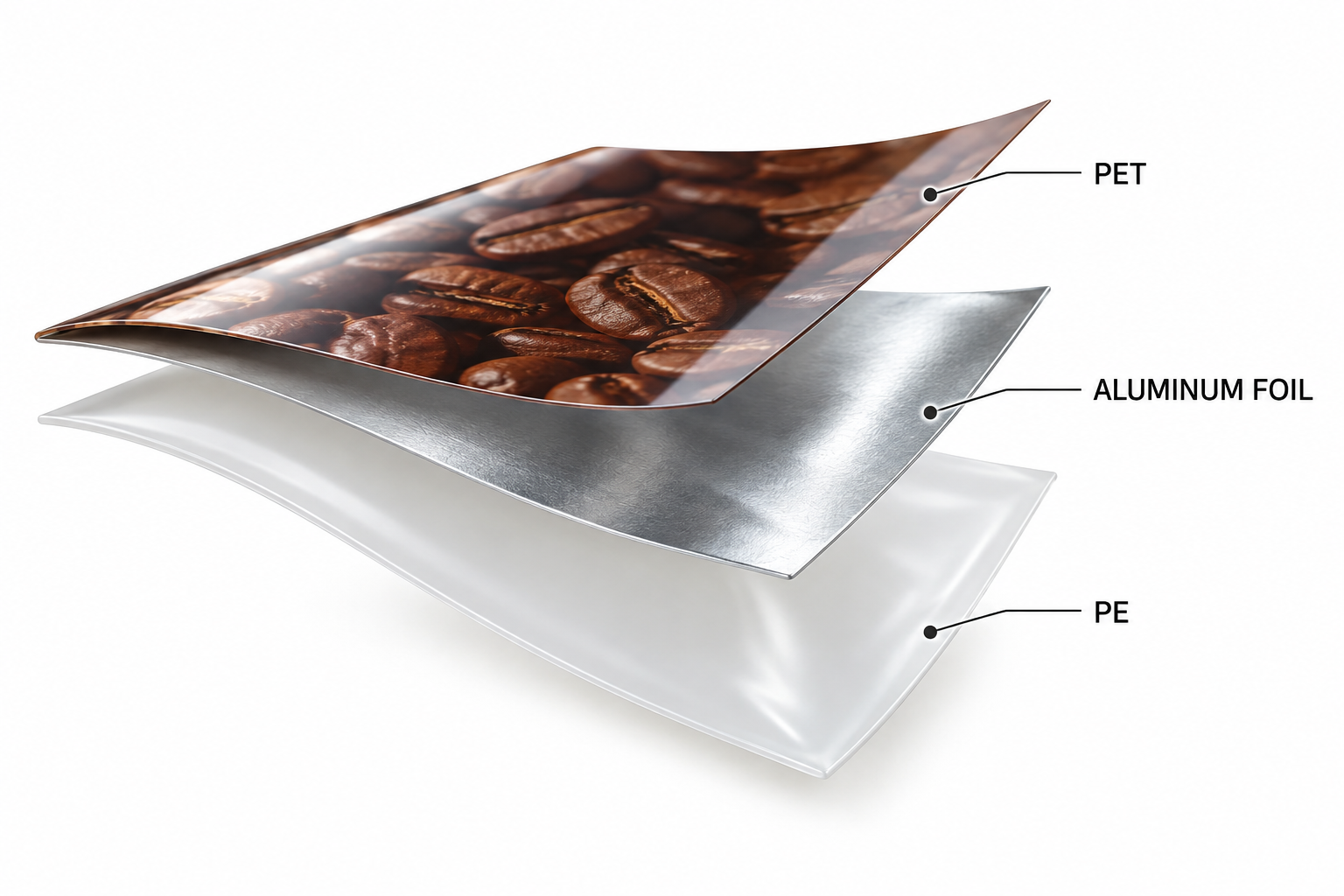
PET (polyester) is the typical outer layer. It is strong, heat-resistant, and takes printing well, which is why most coffee bags have a glossy or matte PET exterior.
Aluminum foil is the classic middle barrier layer. A thin foil layer (usually 6–9 microns) gives near-total protection against oxygen, moisture, and light. The trade-offs are cost, reduced recyclability, and the fact that foil can crease and crack if the bag is heavily folded.
Metallized PET (VMPET) offers a middle ground: better barrier than plain film, lower cost and weight than foil, and a metallic finish many brands like. It is slightly less protective than true foil.
PE (polyethylene) is the standard inner sealant layer. It softens under heat to form strong seals and provides food-contact safety. It has poor barrier properties on its own, so it is always paired with other layers.
Kraft paper is used as an outer layer for brands wanting a natural, unbleached look. The paper itself has no barrier function, so kraft coffee bags always carry a hidden inner film layer — an important point when evaluating sustainability claims.
Sustainable alternatives — recyclable mono-material PE or PP structures, compostable films such as PLA-based laminates, and paper-based high-barrier films — are gaining share as regulations in the EU and elsewhere tighten. Each comes with real trade-offs in barrier performance, cost, and end-of-life infrastructure, which we cover in a separate guide on sustainable coffee packaging.
Key Features That Affect Performance
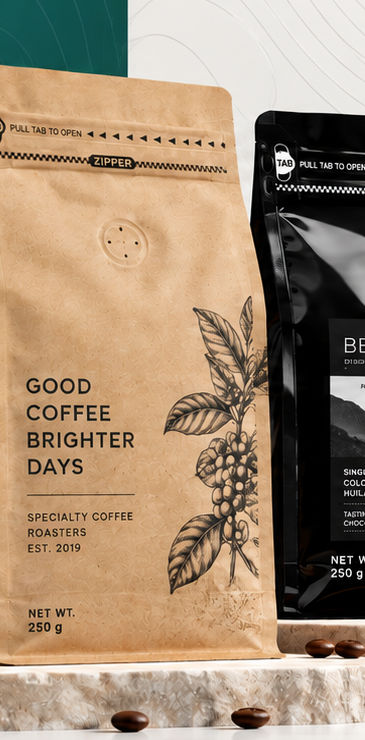
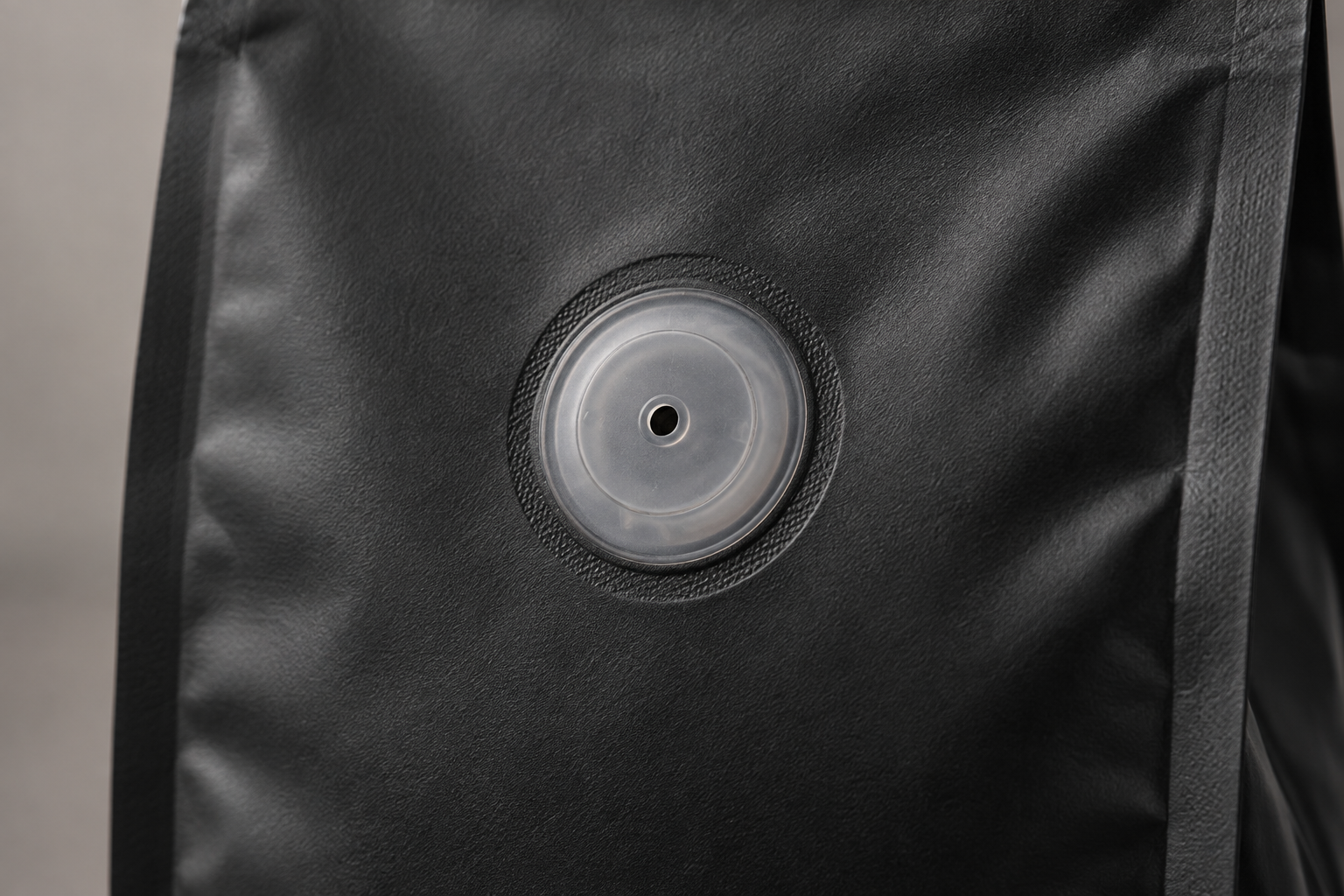
One-way degassing valves are small plastic valves welded into the bag face. They let CO₂ escape from freshly roasted coffee while preventing outside air from entering. Without a valve, a bag of coffee roasted within days of packing can balloon or even burst its seams. Valves are specified by diameter (commonly 5 mm) and by their opening pressure; a valve that opens too easily can admit air during handling, while one that opens too late can cause ballooning.
Resealable zippers extend freshness after opening. For consumer retail sizes (250 g–1 kg), zippers have shifted from a premium extra to a near-default expectation.
Tear notches and hang holes are small details that matter for user experience and retail display, and they must be positioned carefully to avoid weakening the seal area.
Tin ties remain popular on kraft side gusset bags for their classic look and manual reseal function, though they add a component that complicates recyclability.
How Coffee Packaging Is Made: A Factory Perspective
Understanding the production process helps buyers set realistic expectations for cost, lead time, and customization. In a typical flexible packaging factory, coffee bags pass through four stages:
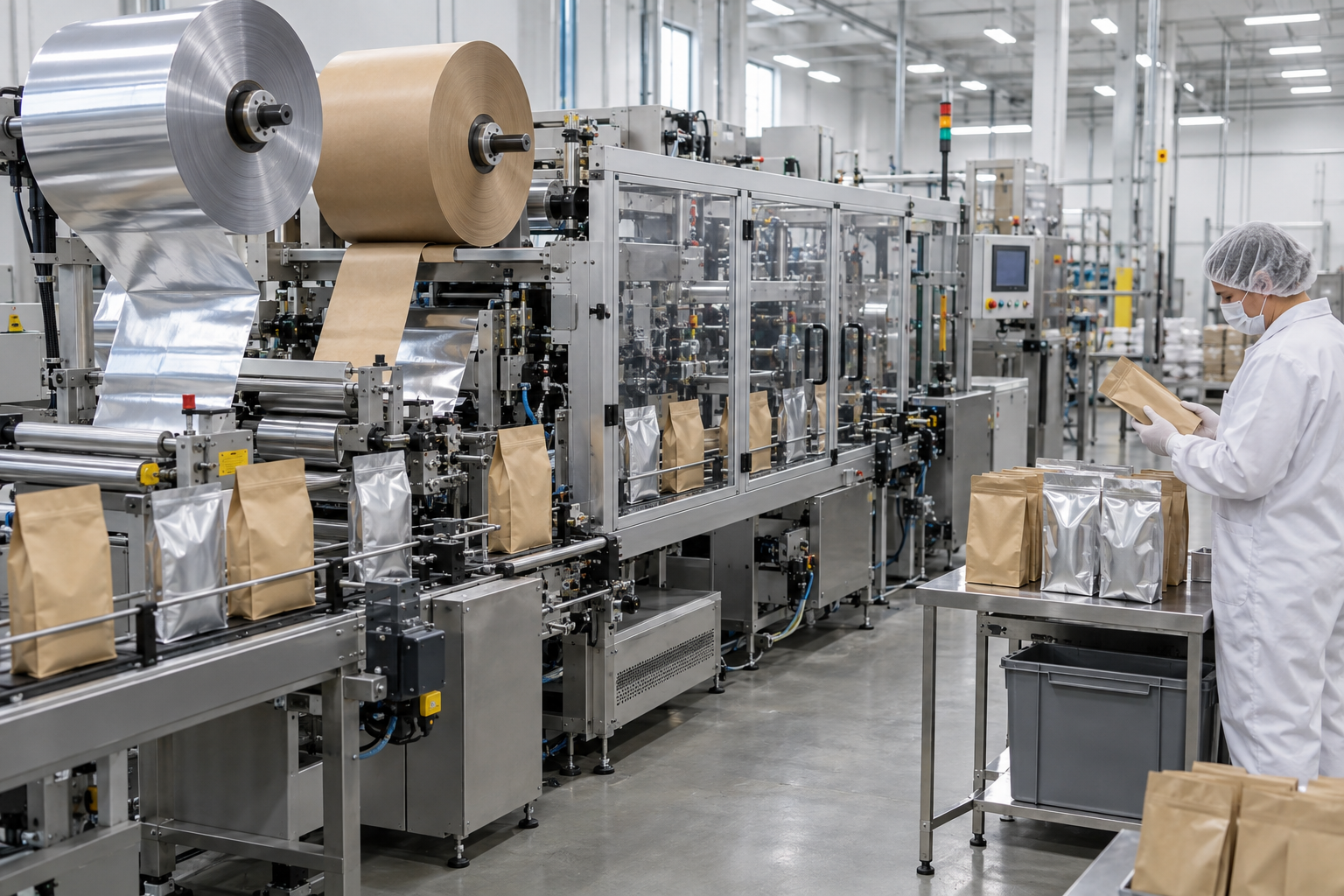
- Printing. Artwork is printed on PET or kraft paper using rotogravure or digital printing. Rotogravure delivers excellent color consistency for long runs (typically 5,000–10,000 bags or more as a minimum order quantity); digital printing suits short runs and rapid design iterations.
- Lamination. Printed film is bonded with adhesive to the barrier and sealant layers, then cured. Lamination quality is invisible in the finished bag but determines whether the film will delaminate under stress — one of the first things a good factory's QC lab checks with peel tests.
- Bag making. Laminated film is cut, folded, and heat-sealed into the final bag shape on automated bag-making machines. This is where valves, zippers, and tin ties are inserted.
- Inspection and packing. Finished bags are checked for seal strength, dimensional accuracy, and print defects, then packed in cartons for shipment.
In our own QC process, seal strength is tested on samples from every production batch — a weak seal is the most common cause of customer complaints in coffee packaging, because a bag can look perfect and still leak through a poorly formed seal. For export orders, pre-shipment inspection typically covers a random sample per AQL standards, checking appearance, dimensions, valve position, and carton markings before the goods leave the factory.
How to Choose the Right Coffee Packaging for Your Brand
When we brief new clients, we typically walk through five questions:
- What is your shelf-life target? Coffee sold and consumed within weeks has different barrier requirements than coffee distributed across continents. Match the structure to the target rather than defaulting to the highest (and most expensive) barrier.
- What is your filling equipment? Bag dimensions, film stiffness, and valve position all interact with filling machines. Providing your filler model to the manufacturer avoids expensive trial and error.
- What are your retail channels? Shelf-stable flat bottom bags for grocery, mailer-friendly pouches for e-commerce, and bulk formats for food service each have different priorities.
- What sustainability position does your brand want to take? Recyclable, compostable, and conventional structures each tell customers something different — and each has real performance limits that should be disclosed honestly.
- What is your realistic volume? MOQs typically start around 5,000–10,000 bags for custom rotogravure printing. Brands below that threshold are often better served with stock bags plus labels, or digital printing short runs.
Coffee Packaging and Your Supply Chain
Packaging decisions ripple through logistics. Bags should be sized so a full case stays under roughly 15–20 kg for manual handling. Carton strength matters for sea freight, where containers can sit in high heat and humidity for weeks. And artwork should leave room for variable data — best-before dates and batch codes are usually inkjet-printed after filling, not at the bag factory.
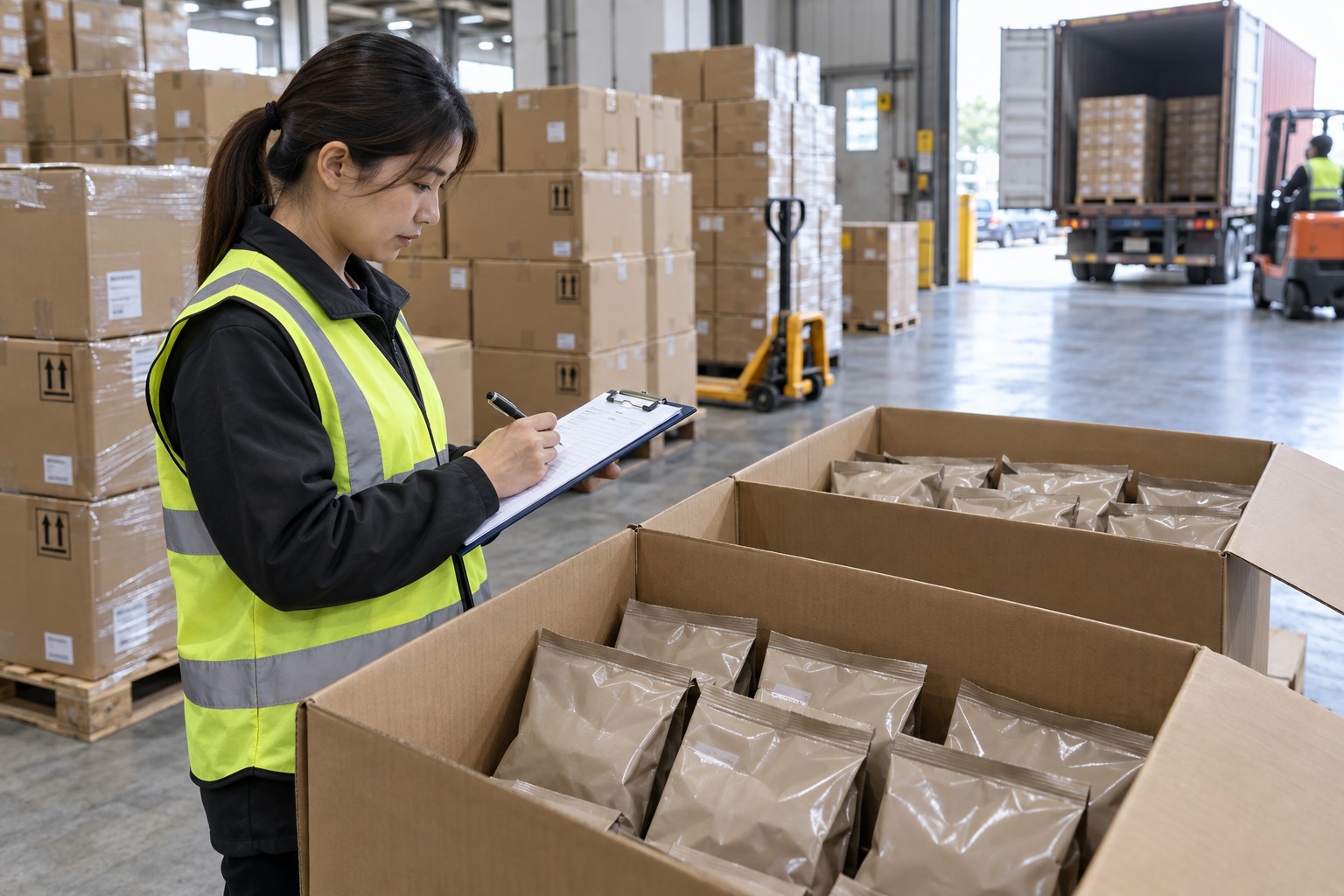
For importers, it is worth confirming that your supplier's export cartons are ISPM-15 compliant if wooden pallets or crates are used, and that moisture barriers or desiccants are considered for long ocean shipments to humid destinations.
FAQ
What is the best packaging for coffee beans?
For most specialty roasters, a flat bottom or side gusset bag with a one-way degassing valve and aluminum-foil barrier layer offers the best balance of freshness protection and shelf presence. The exact best choice depends on shelf-life targets, filling equipment, and budget.
Do all coffee bags need a degassing valve?
No. Valves are essential for packaging freshly roasted whole beans or ground coffee, because roasting leaves the coffee releasing CO₂ for days or weeks. Coffee packed long after roasting, or instant coffee, typically does not need one.
How long does coffee stay fresh in a sealed bag?
With a high-barrier, sealed bag with a valve, whole bean coffee commonly holds cupping-level quality for 6–12 months when stored cool and dry; ground coffee stales much faster, typically within weeks. Actual shelf life depends on the barrier structure, seal integrity, and storage conditions.
What is the minimum order quantity for custom coffee bags?
For custom-printed rotogravure coffee bags, typical MOQs start around 5,000–10,000 bags per design, depending on bag size and structure. Digital printing and stock bags with labels can serve much smaller volumes.
Are coffee bags recyclable?
Traditional multilayer coffee bags with foil are generally not recyclable in curbside programs. Recyclable mono-material PE and PP coffee bags exist and are growing in availability, but recyclability depends on local facilities — so brands should verify end-of-life options in their target markets.
What information must appear on coffee packaging?
Requirements vary by market, but most jurisdictions require the product name, net weight, ingredients (for flavored or blended coffee), origin, roaster or distributor identity, and a best-before date. Retail chains often add barcode, lot coding, and labeling format requirements.
Conclusion
Coffee packaging is far more than a printed bag — it is a freshness system, a logistics component, and often your brand's most visible physical asset. The right choice balances barrier performance, format, features like degassing valves and zippers, and an honest sustainability position, all matched to your real volumes and channels.
Getting this right early saves redesigns, protects quality through the supply chain, and gives your coffee the shelf presence it deserves.
Ready to Develop Your Coffee Packaging?
Spuntree manufactures custom coffee packaging — flat bottom bags, side gusset bags, stand up pouches, and sustainable structures — for coffee brands and roasters worldwide. Tell us your bag size, shelf-life target, and volume, and our team will recommend a structure, provide samples, and quote within one business day. Request a quote or browse our coffee packaging solutions.