01Shelf presence and stability
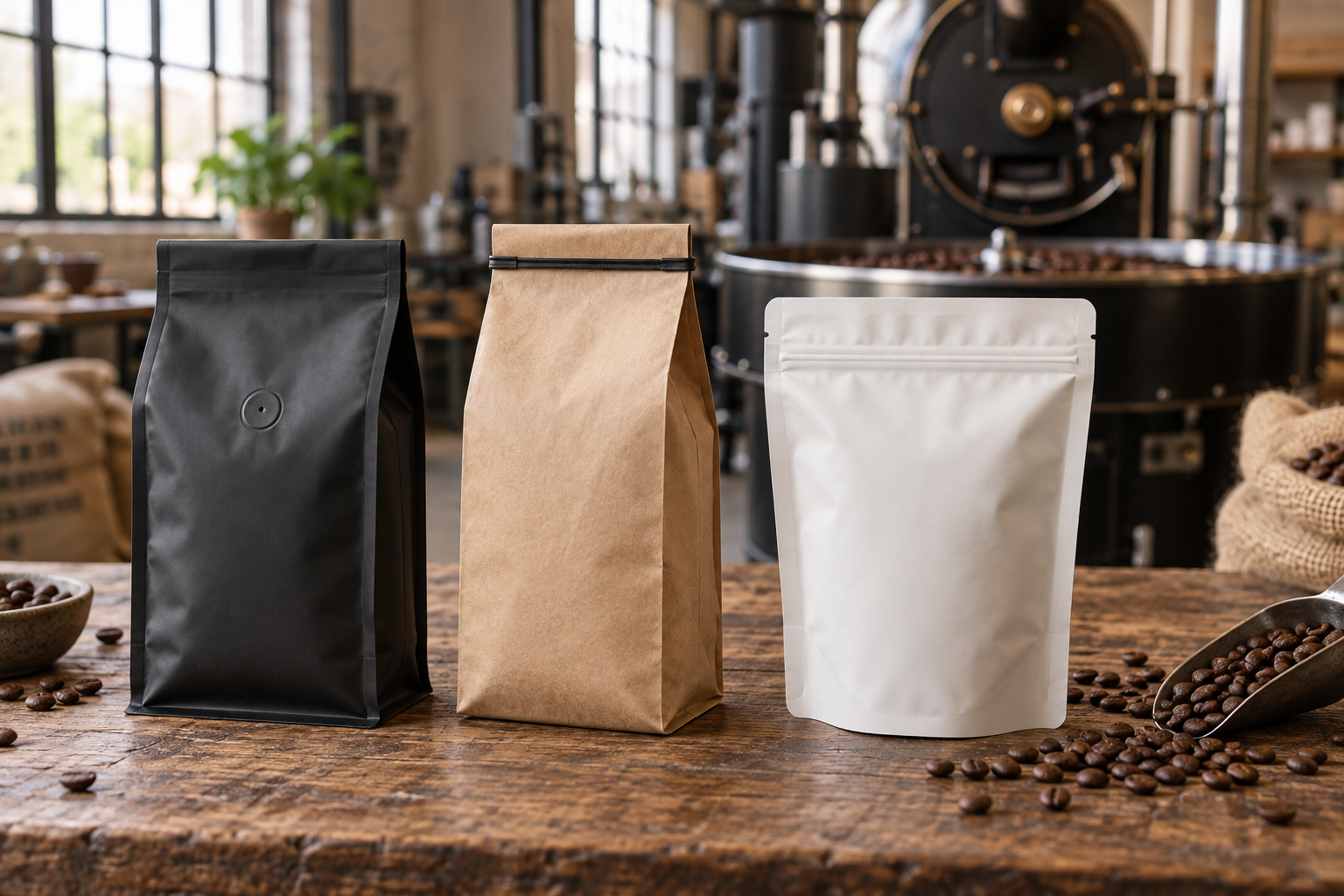
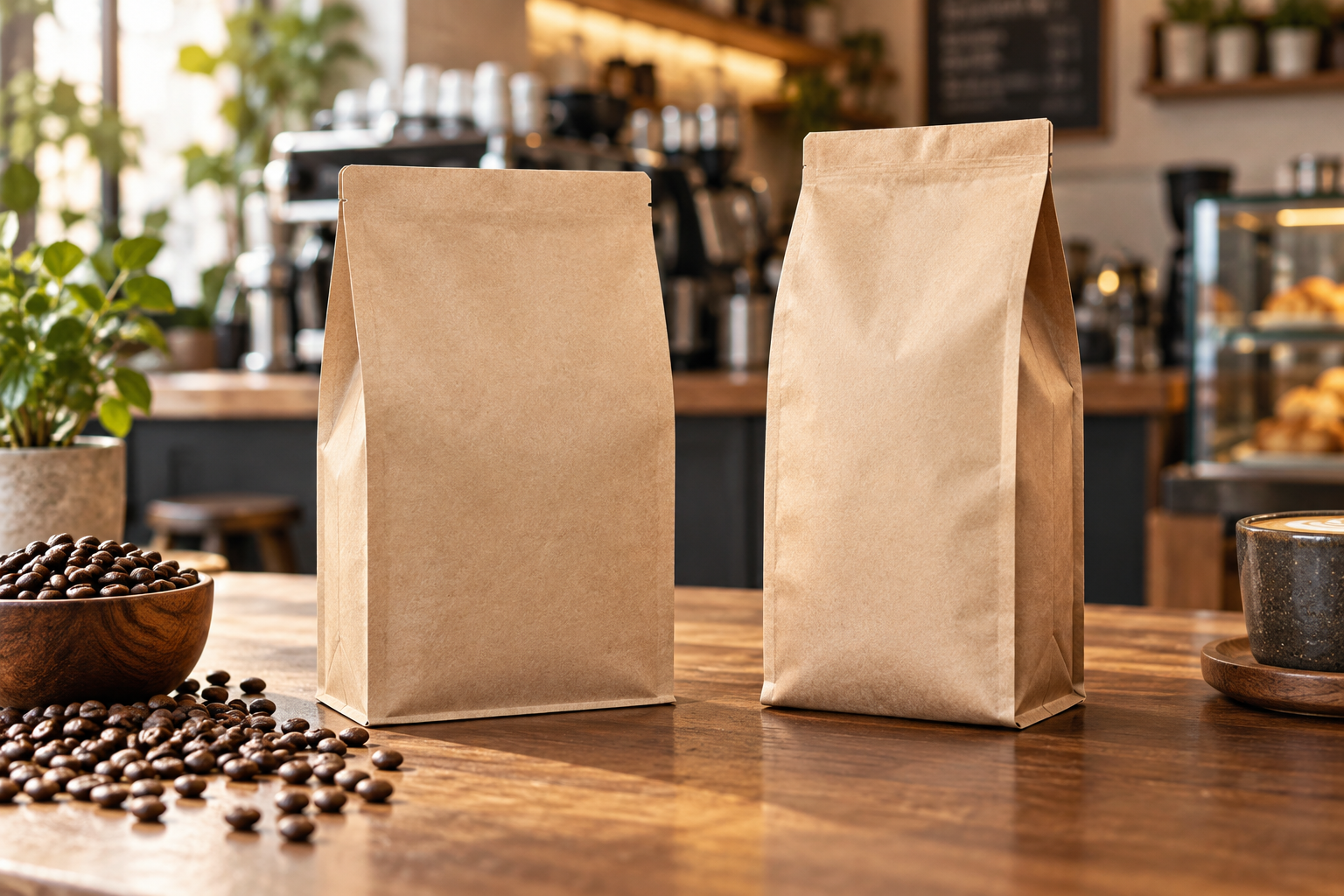
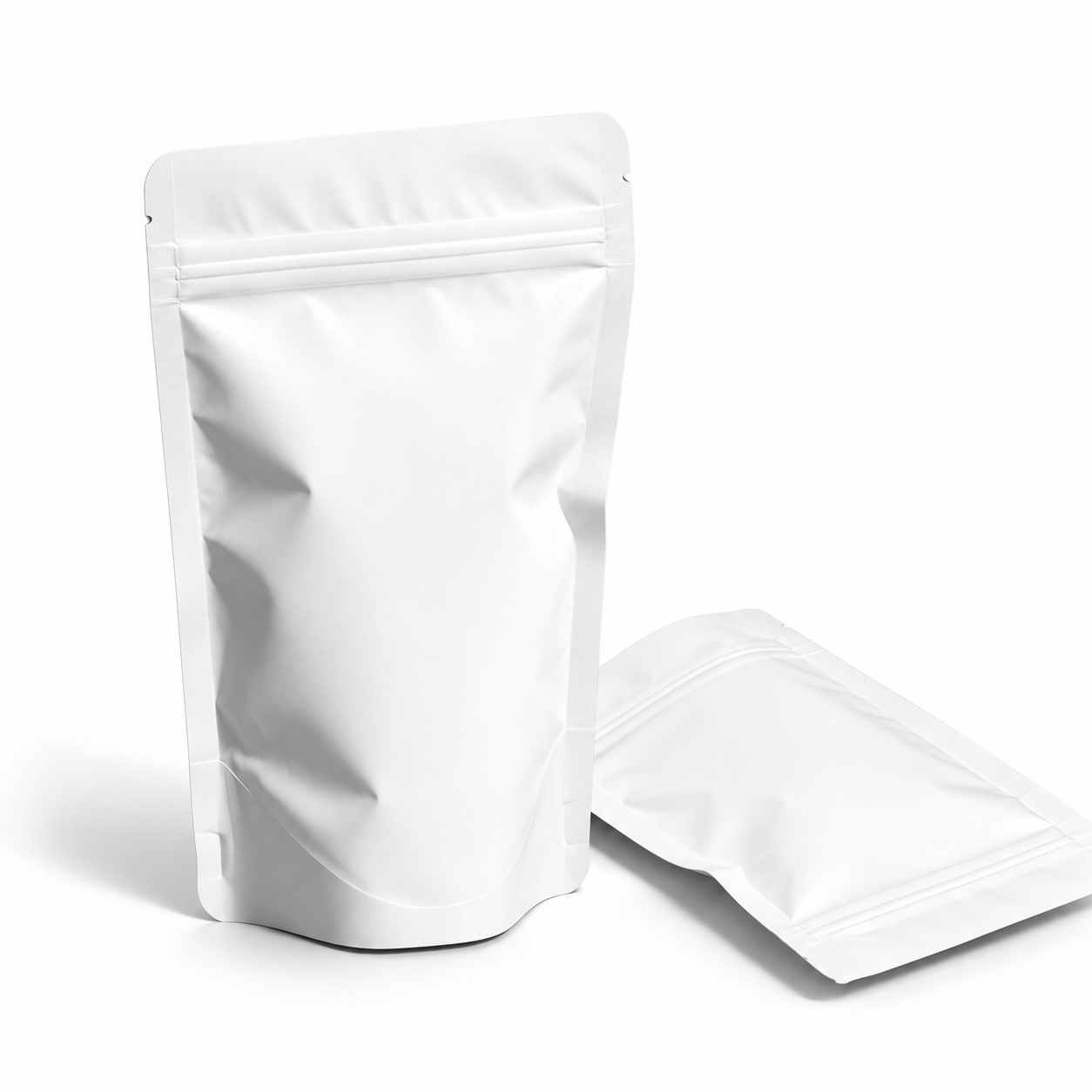
A flat bottom bag stands like a box: five printable panels, crisp edges, and it stays upright even as the fill level drops. A stand-up pouch has a softer, rounded look — familiar to consumers, but it slumps once the bag is half empty.
02Filling and sealing
Stand-up pouches run on almost any filling line, including hand-fill and semi-automatic setups — the opening is wide and forgiving. Flat bottom bags prefer slightly more care at filling but seal just as easily. Both accept one-way valves, zippers and tin ties inline.
03Cost per thousand
At equal size and structure, flat bottom bags cost roughly 10–20% more — they use more film and a more complex converting process. Whether that premium is worth it is a shelf-presence decision, not a technical one.
Key Takeaway
Subscription and grocery brands with premium positioning usually choose flat bottom; startups, sample programs and value lines choose stand-up. Order free samples of both — the decision gets obvious the moment you hold them.