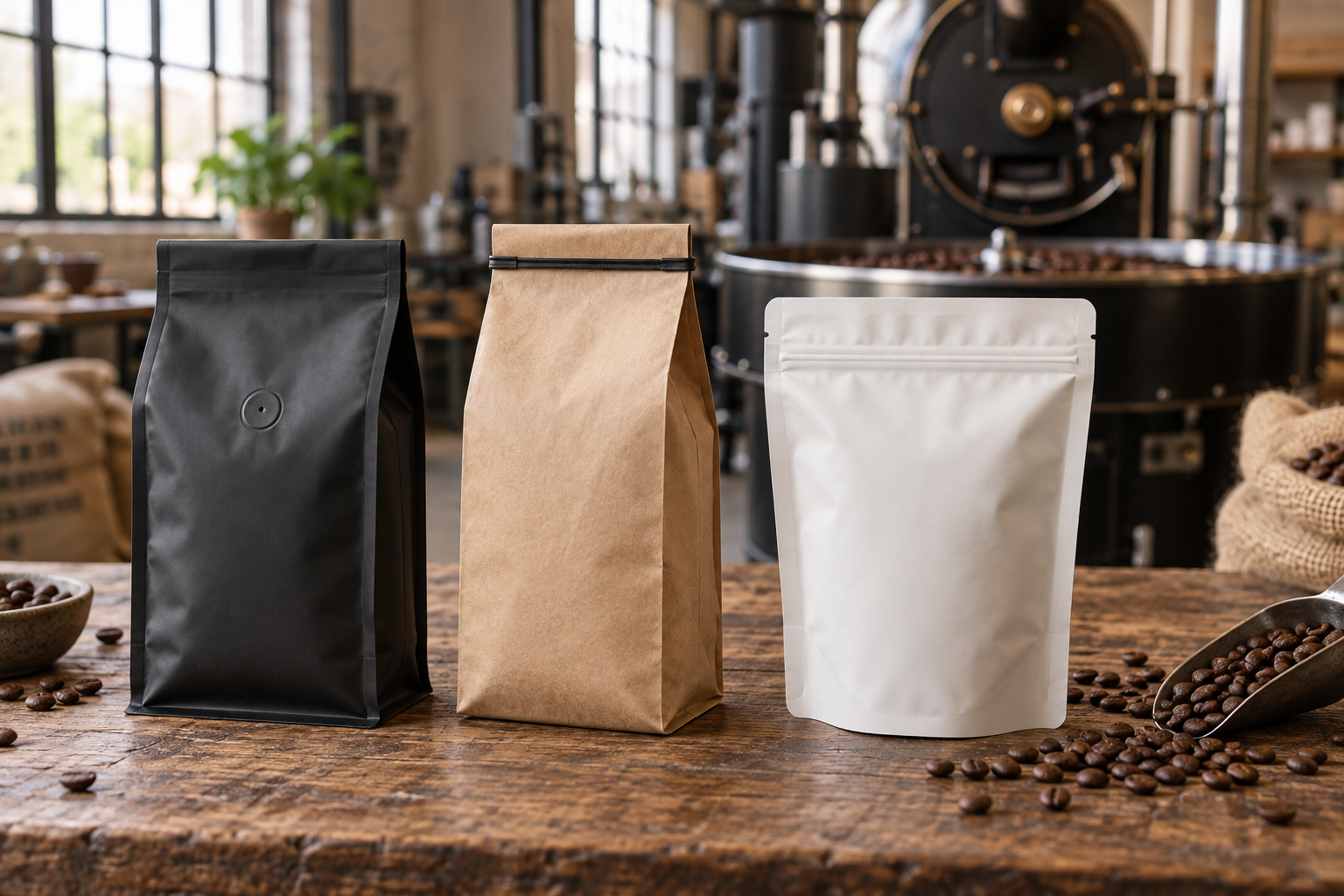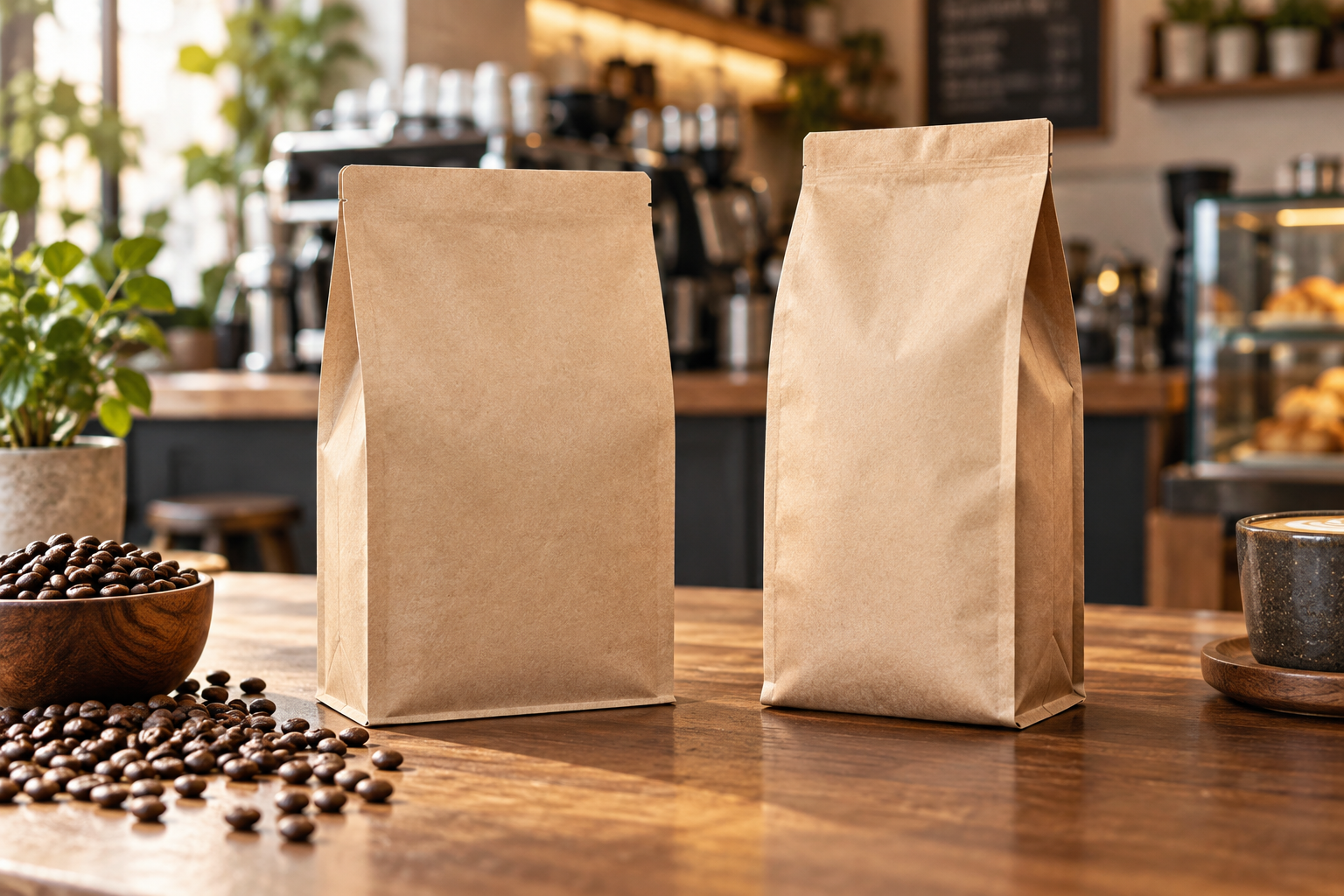
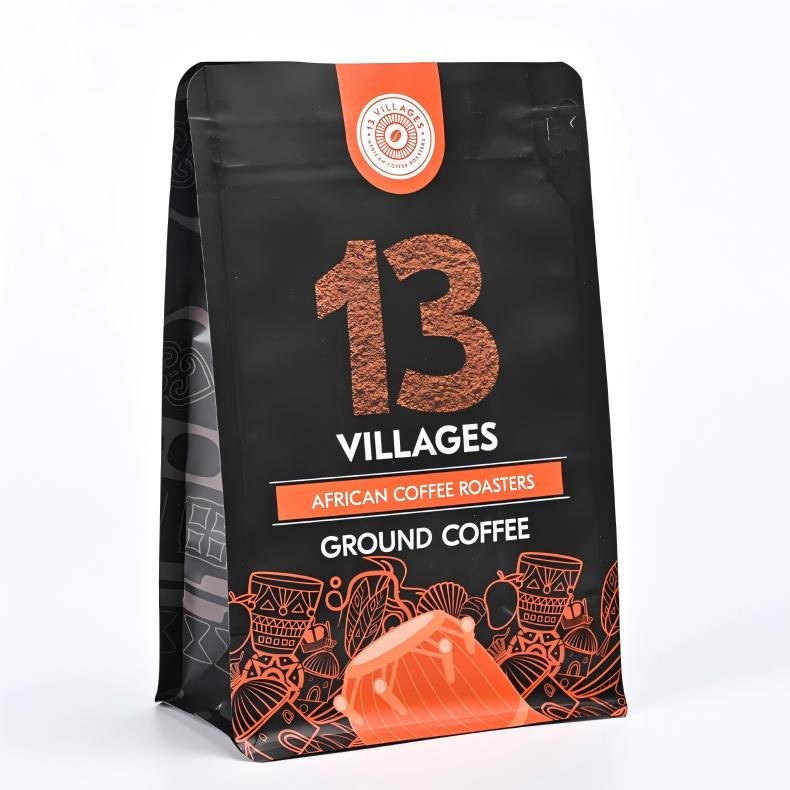
01The four standard retail sizes
Dimensions vary with bean density and roast level — dark roast is less dense and needs more volume. We confirm final dimensions against your actual beans before plate-making.
| Nominal Size | Whole Bean Fill | Flat Bottom Bag (W×G×H) | Best For |
|---|---|---|---|
| 8 oz / 250 g | 227–250 g | 110 × 70 × 260 mm | Sample packs, premium microlots |
| 12 oz / 340 g | 340 g | 120 × 80 × 290 mm | US specialty retail standard |
| 16 oz / 1 lb | 454 g | 130 × 90 × 310 mm | Grocery & subscription |
| 1 kg / 2.2 lb | 1000 g | 150 × 110 × 380 mm | Café wholesale, foodservice |
02Size drives bag style
Under 500 g, both stand-up pouches and flat bottom bags work well; flat bottom wins on shelf presence. At 1 kg and above, flat bottom (box pouch) or side-gusset bags are the practical choice — a filled 1 kg stand-up pouch slumps and tips on the shelf.
03A note on custom sizes
Non-standard fill weights are normal in private label. Because we convert bags in-house, a custom dimension adds no lead time — only a one-time die adjustment. Low MOQ applies to custom sizes too.
Key Takeaway
Pick the size your customer buys, not the size that is cheapest to make — then let the factory match bag style and dimensions to that fill weight. The four sizes above cover 90% of retail coffee programs.